
 phillis
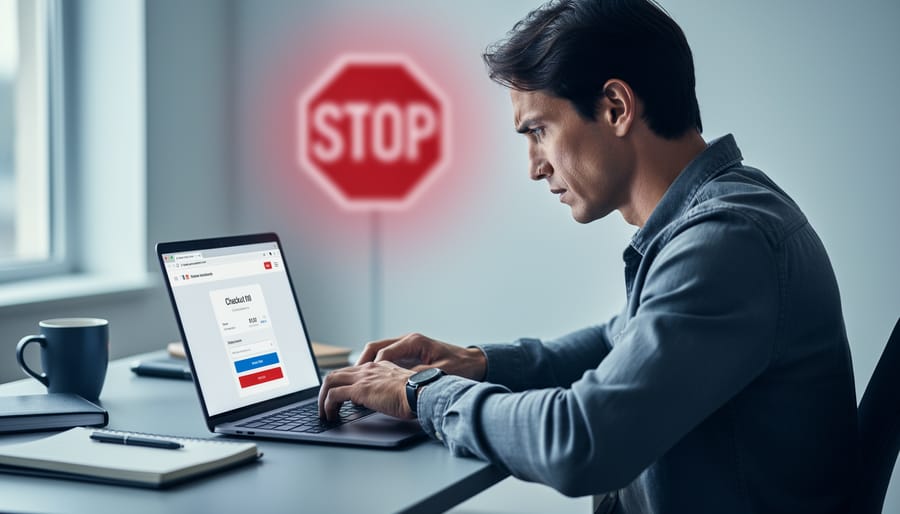
The fastest fix for a shady research peptide seller is simple: stop before you pay, and verify the seller first. If a site has no batch-specific third-party lab report, no real business contact details, and pressure tactics like countdown timers or “only 3 left,” walk away. Buying from a trusted peptide supplier that publishes verifiable testing and clear policies saves you the headache of finding out the hard way.
Think of it like arriving in an unfamiliar city and spotting the taxi with no meter, no license, and a driver who won’t name a price. Your instincts are usually right. The same goes online.
Here’s your quickest diagnostic check, and it takes about two minutes. Look for a physical business address, a working email, and a lab report you can match to a specific batch number. Missing all three? That’s your answer. Check how the seller wants to be paid, too. Payment methods with no buyer protection, such as wire transfers or gift cards, are a classic warning sign.
This guide walks you through the full path. You’ll find a scannable symptom table, the likely causes behind each red flag, step-by-step moves for both pre-payment and post-payment situations, and a simple routine to keep you safe next time. We stay strictly on vetting suppliers and protecting yourself as a consumer, with no dosing or personal-use advice. If money has already left your account, contact your bank or card issuer promptly, because timing matters.
Symptom Triage: Which Warning Signs Are You Seeing?

Storefront Red Flags: When the Website Itself Feels Off
A good storefront gives you something to hold onto: a name, an address, a way to reach a real person. When a site feels like a pop-up stall with the signs still wet, trust that instinct and look closer. You can spot most of the trouble in under five minutes.
- No company name, physical address, or registration details anywhere on the site.
- Product photos that look like stock images or are lifted from other stores.
- Descriptions copy-pasted word for word across different products, or from other sellers.
- Prices far below what comparable suppliers charge.
- Countdown timers and constant “only a few left” banners pushing you to act fast.
- No clear terms of sale, refund policy, or research-use-only statement.
One warning sign alone may have an innocent explanation, like a small shop with a lazy web designer. Several together are a different story. Think of it as a tour operator with no office, no reviews you can trace, and a “book now or lose your spot” pop-up. You’d walk on by, and the same rule applies here.
Communication and Payment Red Flags
A storefront can look polished and still fall apart the moment you try to talk to a real person. Pay attention to how a seller communicates and how they want to be paid, because that is where most trouble shows itself.
Be wary of sellers who only appear in social media DMs or messaging apps, dodge basic questions about testing or lot details, or push you toward crypto transfers, gift cards, or peer-to-peer apps. Those methods are hard to reverse. A seller who won’t send an invoice or receipt is also telling you something.
| What you notice | Where you see it | Severity | First action to take |
|---|---|---|---|
| Replies only via DMs | Support | Serious | Ask for a business email and address |
| Dodged basic questions | Support | Serious | Pause and request lot-specific documents |
| Crypto or gift card only | Checkout | Walk away | Cancel the order |
| No invoice or receipt | Package | Minor to serious | Request one in writing |
Think of it like a tour operator who only takes cash in a parking lot. You wouldn’t book that trip, so don’t place that order.
Likely Causes: Why These Red Flags Show Up in the First Place
Documentation Gaps: COAs That Don’t Add Up
A certificate of analysis is the paperwork equivalent of a passport stamp: it only means something if the details check out. Before you trust one, get the vocabulary straight.
- Certificate of analysis (COA)
- A document reporting what a laboratory found when it tested a specific batch of material, including identity and purity results.
- Third-party lab testing
- Testing done by an independent laboratory with no financial stake in the seller, which makes the results more credible than a seller’s own in-house numbers.
- Lot (or batch) number
- The identifier tying a product to one production run, so a COA can be matched to the exact vial you receive.
- Purity percentage
- The share of the tested sample that is the intended compound rather than impurities, as measured by the lab’s stated method.
- “For research use only” labeling
- A designation indicating the material is sold for laboratory work, not for consumption or personal use.
With those terms in hand, run a quick check. Does the COA name a real, identifiable lab with contact details? Does the lot number match the one on the vial? Is the test date recent enough to make sense for that batch?
The strongest test is also the simplest: contact the lab directly and ask whether it issued that report. A seller who discourages this is telling you something.
Watch for the classic problem, one generic PDF reused across several products. Identical formatting, identical numbers, or no lot number at all suggest the document describes nothing in particular.
Too-Good-to-Be-True Pricing and Claims

A price that sits far below what comparable suppliers charge deserves suspicion, not excitement. Real synthesis, purification and independent testing cost money, so a bargain often means something got skipped. The same goes for purity claims that sound perfect, like “99.9% guaranteed” with no lab named. A good rule of thumb: the louder the promise, the quieter the proof.
Then there are health and performance promises. Legitimate research suppliers don’t make them, because their products are sold for laboratory work, not for results in people. If you’ve spotted this pattern, here’s what to do next.
Walk away from consumer-style marketing, and keep your attention on documentation instead.
Step-by-Step Fix: What to Do If You’ve Already Spotted a Problem
If You Haven’t Paid Yet
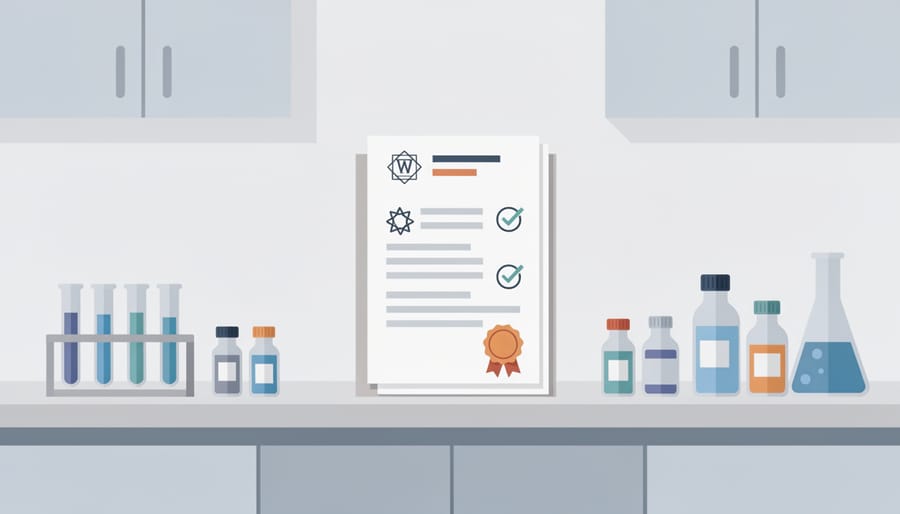
Good news: if no money has changed hands, you hold all the leverage. Think of it like standing at a tour kiosk with your wallet still in your pocket. You can simply step away. Close the checkout tab, ignore any “your cart expires soon” nudges, and give yourself time to check things properly.
Here’s a quick verification routine that takes about fifteen minutes:
- Pause the transaction and leave the checkout page without entering any payment details.
- Look up the domain’s age with a WHOIS tool. A brand-new site claiming years of experience is a mismatch.
- Search for the business in your local company registry and confirm that the name and address match the site.
- Run a reverse image search on the product photos to see whether they’re lifted from other sites.
- Read independent reviews on forums and review platforms, not testimonials on the seller’s own pages.
- Save screenshots of the listing, prices, and any claims in case you need them later.
Then compare what you found against the traits reputable suppliers share: a verifiable business identity, lot-specific certificates of analysis from named independent labs, clear terms of sale, and responsive, knowledgeable support. If several of those are missing, walking away is the right call.
If You’ve Already Paid or Received an Order
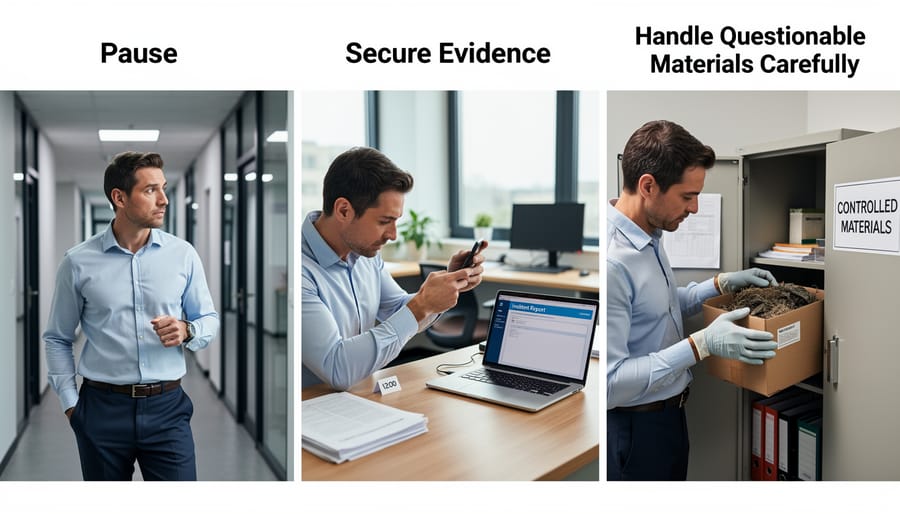
Once money has moved or a package has landed, shift into evidence mode. Start with screenshots of the product page, your cart, the order confirmation, and any claims the seller made. Save every email and chat message, and photograph the packaging, labels, and shipping documents before you open or discard anything. Pull the tracking data and save it too.
Next, contact your card issuer quickly. Many issuers set dispute windows, often 60 days from the statement date, though the exact limit varies, so check yours today. Explain what you ordered, what you received (or didn’t), and attach your documentation. Payment platforms and peer-to-peer apps have their own, usually shorter, claim processes.
Then file a report. In the U.S., that means the FTC and the Internet Crime Complaint Center. Elsewhere, look for your national consumer protection or fraud agency. Reports help investigators spot patterns, much like the practical safety tips travelers share to help each other avoid trouble.
Keep any questionable product sealed and set apart. If you have health concerns tied to a product, talk with a qualified medical professional.
Prevention: Building a Vetting Routine Before You Ever Click Buy
Key Takeaway: The Three Checks That Catch Most Problems
Think of it as a visitor safety checklist for suppliers, the kind of thing you check before you travel only here it protects your money and your research.
Common Questions About Buying Research Peptides Online
Once you know the red flags, a few practical questions tend to come up next. Here are short answers to the ones readers ask most.
How can I tell if a COA is real?
Check that it names an independent lab, carries a recent date, and lists a lot number matching your vial. Then contact the lab directly to confirm it issued the report; a generic PDF reused across products is a warning sign.
Is a low price always a red flag?
Not always, since sales and bulk discounts exist. But a price far below the going market rate, especially paired with pressure tactics or missing paperwork, deserves a closer look before you pay.
What does “research use only” actually mean?
It signals that a product is sold for laboratory research, not for consumption or personal use. Reputable suppliers state it clearly in their terms and avoid making consumer-style health or performance claims.
What should I do if a package arrives damaged or unlabeled?
Photograph the packaging and contents, keep all emails and tracking data, and set the product aside without using it. Then contact the seller and your payment provider about a dispute.
Can I trust reviews on a seller’s own website?
Treat them with caution, because the seller controls what gets published. Look for independent reviews on third-party platforms, and be wary of vague praise or identical wording across testimonials.
Think of verification as a habit you can carry into any online purchase, much like the care you’d take with how to vet CBD sellers before buying from an unfamiliar shop. The same instincts apply: confirm who is behind the storefront, ask for paperwork, and keep the payment trail traceable. If something still feels off after a few minutes of checking, walking away costs you nothing.
Most of the trouble in this corner of the market announces itself early. A storefront with no real business details, a certificate of analysis that doesn’t match the vial, a price that seems too generous, a seller who nudges you toward a payment method you can’t reverse: these show up before a single dollar leaves your account. A few minutes of checking beats weeks of chasing refunds.
Think of it the way a seasoned traveler thinks about a trip. The best journeys rarely come from luck. They come from the quiet work done beforehand, the confirmed bookings, the cross-checked reviews, the backup plan tucked in a pocket. Treat every supplier the same way, and you’ll find fewer unpleasant surprises waiting around the corner.
Keep in mind that everything here is about evaluating suppliers for legitimate laboratory research purposes. If you have questions about health, a qualified medical professional is the right person to ask.