
 phillis
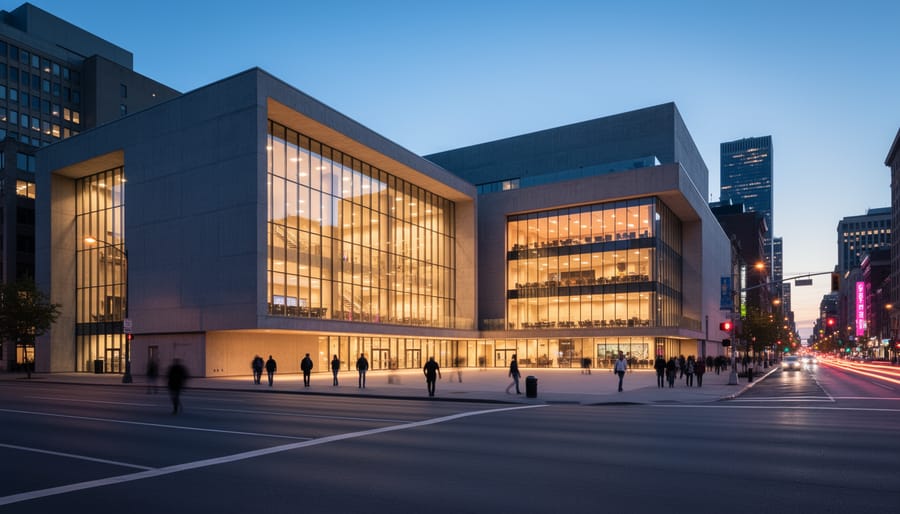
Place des Arts stands as North America’s largest multidisciplinary arts complex, anchoring Montreal’s Quartier des Spectacles with six interconnected concert halls and performance venues that host over 1,000 shows annually. Whether you’re seeking world-class ballet at the Wilder building, an intimate jazz session at the Cinquième Salle, or the Montreal Symphony Orchestra’s soaring acoustics at Maison symphonique, this sprawling cultural campus delivers performances across every artistic discipline. Since opening in 1963 with Salle Wilfrid-Pelletier, the complex has grown into Montreal’s beating heart for performing arts, drawing more than a million visitors each year to its stages.
The complex occupies several city blocks along Rue Sainte-Catherine Ouest, transforming what was once a working-class neighborhood into Montreal’s premier cultural district. Each venue offers distinct programming and atmospheres. You’ll find grand opera productions sharing the calendar with edgy contemporary dance, chamber music concerts alongside comedy shows, and international touring acts performing steps away from homegrown Quebec productions. The architectural journey alone tells Montreal’s story, from the Brutalist concrete of the original 1960s buildings to the sleek glass-and-steel Maison symphonique completed in 2011.
Understanding the layout and programming helps you match the right venue to your interests, timing your visit to catch everything from September’s jazz festivals to winter holiday concerts and spring dance showcases.
Why Visit Place des Arts
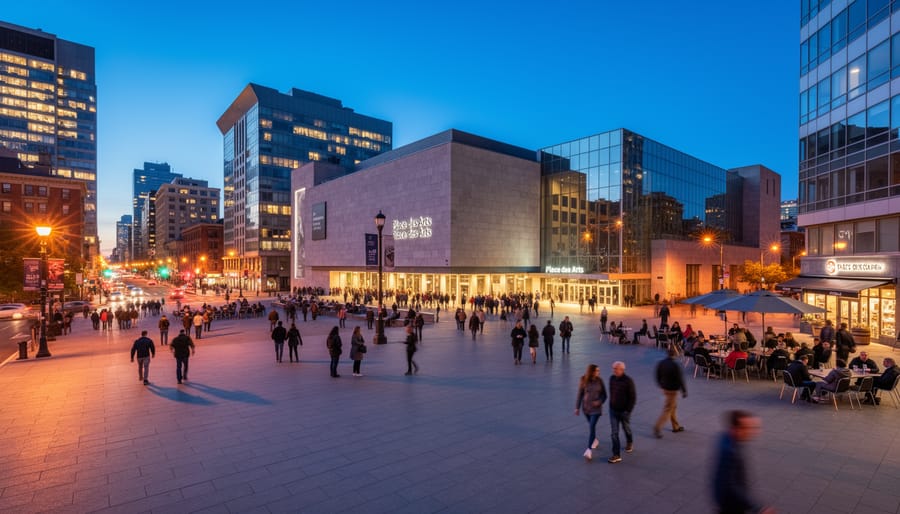
Place des Arts stands as Montreal’s cultural crown jewel, offering visitors an unmatched immersion into Canada’s vibrant francophone performing arts scene. Whether you’re drawn to classical ballet, experimental theater, or grand opera, this complex delivers a caliber of performance and architectural experience that transforms an evening out into a lasting memory of your Montreal journey.
The programming alone justifies a visit. You’ll find the Orchestre symphonique de Montréal performing Mahler under soaring acoustics, Les Grands Ballets Canadiens executing breathtaking contemporary choreography, and Opéra de Montréal staging lavish productions that rival anything in New York or Paris. The variety spans classical masterworks to cutting-edge multidisciplinary performances, ensuring that culture enthusiasts of every taste discover something compelling. Unlike single-venue theaters, Place des Arts houses five distinct halls under one roof, each calibrated for different art forms and atmospheres.
The architecture itself captivates. Built during Montreal’s mid-century cultural renaissance, the complex showcases bold modernist design, sweeping glass facades, sculptural concrete forms, and interior spaces that feel both monumental and intimate. Walking through the lobbies and connecting corridors becomes part of the experience, especially when outdoor light installations from the Quartier des Spectacles spill across the plaza.
What truly sets Place des Arts apart:
- Year-round programming means exceptional performances regardless of your travel dates
- Direct connection to Montreal’s festival heartbeat in the Quartier des Spectacles
- Authentic francophone cultural experience unavailable elsewhere in North America
- Five venues offering everything from 350-seat experimental spaces to 3,000-seat opera halls
- Seamless metro access and integration with Montreal’s underground pedestrian network
For visitors exploring historic Montreal, attending a performance here provides cultural context that museums alone can’t deliver. You’ll sit among Montrealers passionate about their arts tradition, experience Quebec’s distinct theatrical voice, and understand why this city punches far above its weight in the performing arts world. The complex anchors an entire entertainment district where pre-show dining, post-performance drinks, and spontaneous festival encounters turn a single evening into a complete Montreal experience.
The Venues of Place des Arts
1. Salle Wilfrid-Pelletier
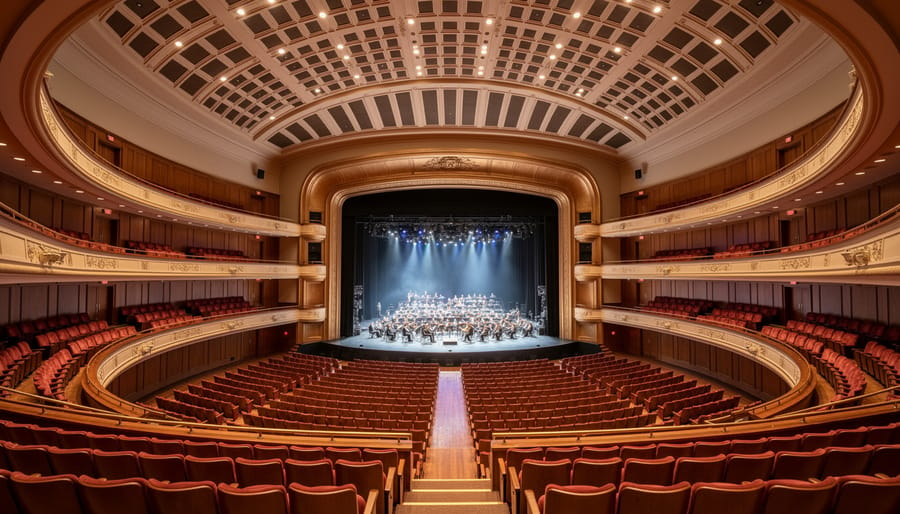
Salle Wilfrid-Pelletier stands as the crown jewel of the complex, a concert hall that rivals the great opera houses of Europe. With nearly 3,000 seats arranged in a sweeping horseshoe configuration, it creates an intimate connection between performers and audience despite its grand scale. The hall serves as the permanent home of both the Opéra de Montréal and Orchestre symphonique de Montréal, two of Canada’s most prestigious performing arts organizations.
The acoustics here are nothing short of exceptional. Sound travels with remarkable clarity from the stage to even the uppermost balcony seats, making every vocal nuance and orchestral color accessible. You’ll find a rich calendar of programming throughout the season: full-scale opera productions with elaborate sets and costumes, symphonic concerts featuring international soloists, and performances by Les Grands Ballets Canadiens.
What sets this venue apart is its ability to transport you. The mid-century architecture, all soaring lines and elegant curves, frames the stage like a masterpiece. Chandeliers glitter overhead, and the plush red seating creates a sense of occasion before the curtain even rises. For visitors seeking a truly memorable cultural evening in Montreal, attending a performance here delivers both world-class artistry and the grandeur of a landmark venue.
2. Théâtre Maisonneuve
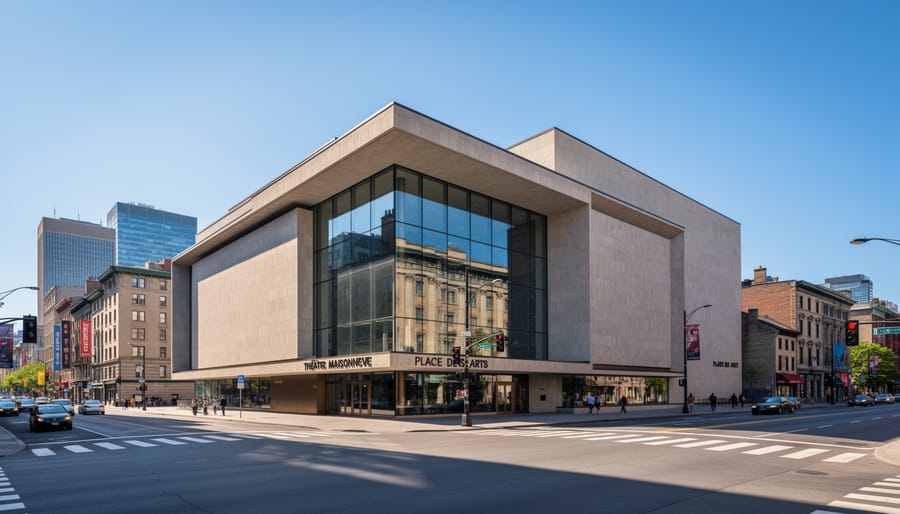
Théâtre Maisonneuve strikes a balance between intimacy and grandeur, with a seating capacity nearly 1,500 that creates an engaging atmosphere without feeling overwhelming. Its architectural style leans modern and clean, with excellent sightlines from most seats and acoustics designed for both spoken word and musical performances. This versatility makes it one of the complex’s most active venues.
Dance enthusiasts should prioritize Théâtre Maisonneuve. It’s the home stage for Les Grands Ballets Canadiens, one of North America’s premier ballet companies, where you’ll catch both classical repertoire and bold contemporary works throughout the season. The theater also hosts visiting dance troupes from around the world, often showcasing cutting-edge choreography that pushes traditional boundaries.
Beyond dance, the programming spans ambitious theatrical productions and touring shows that benefit from the hall’s technical capabilities. The stage can accommodate elaborate sets and complex lighting designs, allowing productions to deliver full visual impact. If you’re traveling during the fall or winter months, check the schedule, this is when the most acclaimed performances typically run.
The theater’s mid-size scale means performers feel present without the distance you’d experience in the larger Salle Wilfrid-Pelletier, making it ideal for work that thrives on audience connection.
3. Salle Jean-Duceppe
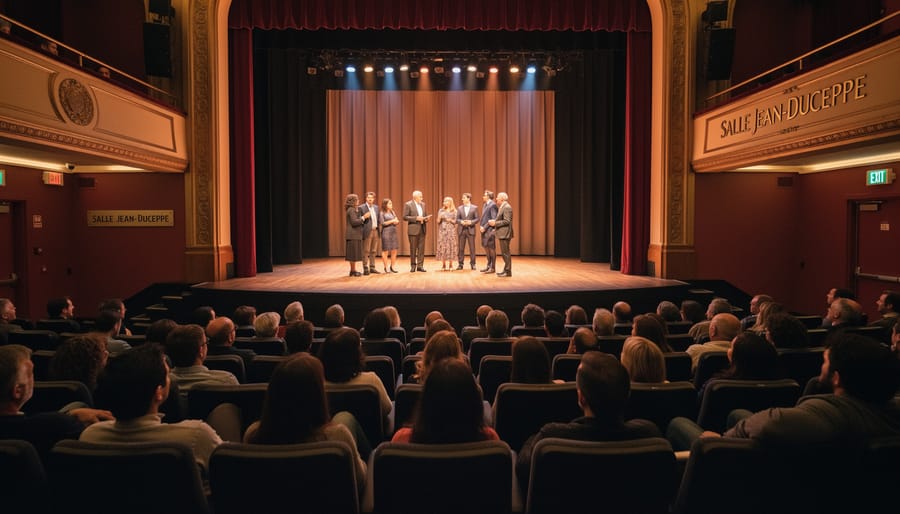
Featuring 765 seats arranged in a single balcony configuration, Salle Jean-Duceppe offers an intimate theatrical experience that feels worlds apart from the grand opera house atmosphere of Wilfrid-Pelletier. Named after one of Quebec’s most celebrated actors, this venue serves as the heart of Montreal’s francophone theater scene, staging contemporary and classic plays almost exclusively in French.
The theater’s compact size creates an immediacy between performers and audience that larger halls can’t replicate. You’re close enough to catch subtle facial expressions and hear every nuance of dialogue, making it ideal for the character-driven dramas and comedies that dominate the programming. Productions here range from Quebec playwrights exploring local identity and history to French-language adaptations of international works.
For visitors interested in experiencing authentic Quebec culture beyond the tourist circuit, an evening at Salle Jean-Duceppe provides direct access to the stories, humor, and social commentary that resonate with francophone Montreal. Even if your French is limited, the theatrical energy and skilled performances often transcend language barriers, offering a memorable glimpse into the province’s rich dramatic tradition.
4. Cinquième Salle (Fifth Hall)

The Cinquième Salle lives up to its name as the fifth venue added to the complex, but its small size belies its outsized impact on Montreal’s contemporary arts scene. With just 350 seats, this intimate space was purpose-built for experimentation and risk-taking performances that push boundaries.
This is where you’ll find the most daring programming at Place des Arts. The hall hosts cutting-edge dance, avant-garde theater, multimedia installations, and genre-defying performances that don’t fit traditional categories. Emerging Quebec artists often premiere new work here before moving to larger stages, giving visitors a chance to witness creative innovation in its earliest stages.
The venue’s flexible design allows for varied seating configurations, creating different relationships between performers and audience. Some shows use the space in-the-round, others as a thrust stage, making each visit feel unique. The technical capabilities rival much larger theaters, with sophisticated lighting and sound systems that support complex productions.
Culture enthusiasts willing to venture beyond mainstream performances will find the Cinquième Salle particularly rewarding. The programming skews younger and more experimental, reflecting Montreal’s reputation as a laboratory for contemporary performance art.
5. Studio-théâtre
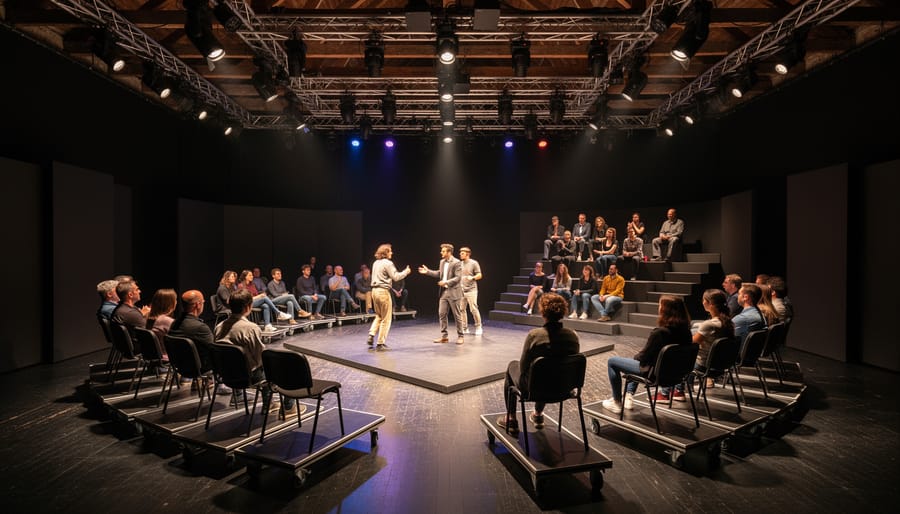
The Studio-théâtre represents Place des Arts at its most experimental, offering a flexible black-box space where the traditional boundaries between performer and audience blur. With movable seating and configurable staging, this venue transforms for each production, creating intimate settings that might put you inches from dancers, musicians, or actors.
The programming leans heavily toward cutting-edge contemporary work: multimedia performances that combine video projection with live music, immersive theatrical experiences where the audience moves through the space, avant-garde dance that challenges conventional forms, and interdisciplinary collaborations you won’t find in larger, more traditional halls. Many productions here showcase Montreal’s vibrant contemporary arts scene, featuring local artists alongside international experimental performers.
The Studio-théâtre particularly appeals to visitors seeking something beyond mainstream performances. Shows here tend toward shorter runs and limited engagements, making each production feel like a rare opportunity. The stripped-down aesthetic, exposed technical elements, minimal decoration, puts complete focus on the artistic vision unfolding before you. For travelers wanting to experience Montreal’s reputation as a hub of contemporary performance innovation, this venue delivers exactly that edge.
The Quartier des Spectacles Connection
Place des Arts doesn’t exist in isolation, it serves as the cultural anchor of the Quartier des Spectacles, Montreal’s sprawling 1.4-square-mile entertainment district. This pedestrian-friendly zone, which stretches east to Saint-Denis Street and south to René-Lévesque Boulevard, transforms the heart of the city into an interconnected cultural playground where indoor performances blend seamlessly with outdoor programming.
The Esplanade Place des Arts, the massive public plaza directly fronting the complex, functions as Montreal’s living room during warmer months. From May through September, the space hosts free outdoor concerts, contemporary art installations, and pop-up cultural events that draw both locals and tourists. The plaza’s distinctive red pavers and interactive light installations create a welcoming gathering place where you can experience Montreal’s creative energy without buying a ticket.
What makes the Quartier des Spectacles special is its deliberate design as a pedestrian cultural corridor. You can walk from Place des Arts to the Musée d’art contemporain next door, then continue to smaller venues, galleries, and performance spaces without dodging traffic. The district’s lighting design, over 200 programmable architectural illuminations and 50 interactive light installations, creates a unified aesthetic that makes evening strolls between venues genuinely enjoyable.
The underground city connection (RÉSO) extends this accessibility year-round, letting you navigate between cultural destinations during Montreal’s harsh winters without stepping outside. This integration means Place des Arts isn’t just a destination, it’s the gateway to Montreal’s entire performing arts scene.
Practical Visitor Information
Booking tickets for Place des Arts performances is straightforward through multiple channels. Purchase directly from the complex’s main box office (1175 Sainte-Catherine Street West), individual venue box offices, the official website, or by phone at 514-842-2112. The central box office operates Monday through Saturday from 12:00 PM to 6:00 PM, with extended hours on performance days until show time. Online booking is available 24/7 and typically offers the widest selection, particularly for popular shows and festival events throughout the year.
| Venue | Typical Price Range | Performance Times |
|---|---|---|
| Salle Wilfrid-Pelletier | $40-$150 | 7:30 PM weekdays, 2:00 PM matinees |
| Théâtre Maisonneuve | $35-$120 | 8:00 PM evenings, occasional 2:00 PM |
| Smaller Venues | $25-$80 | 8:00 PM or 8:30 PM |
Place des Arts excels in accessibility. All venues offer wheelchair seating, assisted listening devices, and elevators throughout the complex. Reserve accessible seating when booking by calling the box office directly, as online systems may not show all options.
Many performances are in French, reflecting Quebec’s cultural identity. Opera and some theater productions offer English or French surtitles projected above the stage. Check performance details before booking if language is a concern, classical music, ballet, and contemporary dance transcend language barriers.
Dress codes lean smart casual. You’ll see everything from business attire to clean jeans at most performances, though opening nights and opera galas tend dressier. Arrive 20-30 minutes early to collect tickets, check coats, and find your seats without rushing. Latecomers are typically seated during intermission rather than disrupting performances. Photography and recording are prohibited during shows, though lobby areas welcome photos.
Getting There and Around
Getting to Place des Arts couldn’t be simpler, thanks to Montreal’s excellent public transit and the complex’s central location. The venue sits at the heart of downtown, making it accessible from virtually every corner of the city.
The metro offers the most convenient access. Place-des-Arts station serves both the Green Line and the Orange Line, with exits leading directly into the underground complex. From most tourist areas, you’ll reach the venue in under 20 minutes: Old Montreal is about 10 minutes away (transfer at Berri-UQAM), Mont-Royal and the Plateau take 15 minutes, and even Jean-Talon Market in Little Italy is only 12 minutes on the Orange Line. The station’s distinctive architecture, featuring colorful stained glass by Frédéric Back, makes your arrival part of the cultural experience.
- Metro: Place-des-Arts station (Green and Orange lines) with direct indoor access
- Parking: Complexe Desjardins garage (680 spaces, entrance on Jeanne-Mance), Place des Arts underground lot (entrance on De Maisonneuve), and Quartier des Spectacles public parking
- Walking: 20 minutes from Old Montreal via Saint-Laurent Boulevard, 15 minutes from McGill University area, 10 minutes from the Latin Quarter
- Underground city (RÉSO): Connected pedestrian network links to major hotels and metro stations, ideal during winter
If you’re driving, expect to pay typical downtown rates of around $20-30 for evening parking. The RÉSO underground network proves invaluable during Montreal’s harsh winters, letting you walk from your hotel to the performance halls without stepping outside. You can access the network from most major downtown hotels and navigate using clear signage to “Place des Arts” throughout the system.
Dining and Amenities
Place des Arts houses the Salon des Arts, an elegant on-site restaurant with pre-theatre menus and a sophisticated atmosphere perfect for pre-show dining. During intermissions, you’ll find bars on multiple levels serving wine, cocktails, and light refreshments. The venue also operates coat check services at each hall (small fee applies) and a boutique gift shop selling performance-related merchandise, books, and Montreal cultural souvenirs.
The sculpture garden between the buildings offers a peaceful outdoor space worth exploring before or after performances, featuring rotating contemporary installations.
Beyond the complex itself, Sainte-Catherine Street runs directly adjacent and hosts dozens of restaurants covering every cuisine and budget. Within a five-minute walk, you’ll discover French bistros, Italian trattorias, sushi restaurants, and casual cafés ideal for pre-show meals. Many establishments offer early-bird specials timed for theatre-goers, typically between 5:00 and 6:30 PM.
The underground city connection via Montreal public transit provides weather-protected access to additional dining options in the surrounding blocks, particularly useful during winter months. Reserve ahead for popular spots on weekend performance nights, as the entire Quartier des Spectacles draws substantial crowds.
Local Tips for Your Visit
Check the online schedule a few weeks before your trip and book tickets early for popular performances, Orchestre symphonique de Montréal concerts and major ballet productions often sell out. If you’re flexible, rush tickets sometimes become available at the box office an hour before curtain time for significantly reduced prices, though availability varies by show.
Visit during the Montreal International Jazz Festival in late June or Just for Laughs in July to catch free outdoor performances on the Place des Arts plaza, the complex becomes the festival hub with stages, installations, and a vibrant atmosphere. The sculpture garden and outdoor spaces are worth exploring year-round, especially to see the changing light installations that illuminate the plaza after dark.
Arrive 30 minutes before curtain rather than rushing in at the last moment. This gives you time to check coats, grab a drink, admire the mid-century architectural details in the lobbies, and settle into your seat without stress. Photography is typically prohibited during performances but allowed in the public spaces before shows and during intermission.
Combine your visit with the Musée d’art contemporain next door, which stays open late on Wednesdays and often coordinates exhibitions with Place des Arts programming. The Latin Quarter is a short walk east along Sainte-Catherine Street, offering pre-show dining options that range from casual bistros to upscale French restaurants. If you’re visiting in winter, use the underground city connection from Place-des-Arts metro to stay warm while exploring nearby shops and cafés before your performance.
Most programs include French-language descriptions, but don’t let that deter you, music and dance transcend language barriers, and the quality of performances speaks for itself.
Frequently Asked Questions
Are performances in English or French?
Most performances at Place des Arts are in French, reflecting Montreal’s francophone culture, but opera and ballet are often accessible regardless of language. Some theatrical productions offer English surtitles, and the Orchestre symphonique de Montréal concerts transcend language barriers entirely. Check individual show details when booking.
Can I tour the venues without attending a show?
Yes, Place des Arts offers guided architecture and history tours that let you explore the halls, public spaces, and art installations without a performance ticket. Tours run seasonally, so check the website for current schedules and booking.
What should I wear?
There’s no strict dress code, though many Montrealers dress smartly for evening performances. Business casual works well for most shows, but you’ll see everything from cocktail attire at the opera to jeans at contemporary dance performances.
How early should I arrive?
Plan to arrive 30 minutes before curtain to collect tickets, check coats, and find your seats comfortably. Popular shows draw crowds, and you’ll want time to admire the architecture and settle in without rushing.
Are children allowed?
Age policies vary by performance. Family-friendly shows welcome children, but most evening performances have minimum age requirements (often six years old). Check the specific show’s guidelines when booking, as some venues don’t permit young children at classical concerts.
What if I don’t speak French?
You’ll manage fine. Box office staff speak English, signage is bilingual, and ushers can assist in both languages. While French-language theater requires some understanding, ballet, symphony, and opera performances communicate visually and musically.
Since many performances run late, especially opera and ballet, familiarize yourself with evening neighborhood tips for the Quartier des Spectacles. The area stays lively after shows, with metro service running until past midnight on weekends. If you’re new to Montreal’s nighttime transit and walking routes, reading up on how to stay safe at night helps you navigate confidently from the theater district back to your hotel.
Place des Arts stands as the beating heart of Montreal’s performing arts scene, where world-class performances unfold nightly within striking mid-century halls. Whether you’re drawn to the grandeur of opera at Salle Wilfrid-Pelletier, the intimacy of experimental theater at Cinquième Salle, or the architectural beauty of the complex itself, this cultural landmark offers experiences you won’t find elsewhere in Canada.
As you plan your Montreal journey, check the current programming at Place des Arts well before your travel dates. The best shows sell out weeks in advance, particularly during festival season when the entire Quartier des Spectacles comes alive. Even if you don’t attend a performance, the public spaces, sculpture garden, and plaza merit exploration as part of any cultural itinerary through historic Montreal.
This is where Montreal’s francophone identity, artistic ambition, and architectural heritage converge. It’s not just a venue complex but a window into what makes this city distinct. Walk through those glass doors, climb the grand staircases, and let Montreal’s cultural pulse wash over you.