
 phillis
Montreal shelters one of North America’s most distinctive cultural institution landscapes, where nearly 100 museums, heritage sites, and cultural centers blend French colonial history, Indigenous storytelling, and cutting-edge contemporary installations into experiences you won’t find replicated anywhere else on the continent. From the immersive astronomy programs at Planétarium to the 300-year-old stone walls of Château Ramezay, the city’s institutions deliver both depth and diversity, whether you’re exploring seamstress testimonials at the MEM Centre or navigating environmental art installations at the Biosphère.
What makes planning straightforward is the clustering. Old Montreal anchors your heritage itinerary with Château Ramezay, Pointe-à-Callière, and Maison Saint-Gabriel all within walking distance, while the Olympic Park district groups the four Espace pour la vie institutions (Biodôme, Insectarium, Planétarium, and Biosphère) under a single pass system. Right now, fall 2026 brings active exhibitions like Celestial Chronicles at the Planétarium through November 1, Real Life Instinct at Château Ramezay until mid-December, and the digital house experience at Maison Saint-Gabriel wrapping October 31.
The rhythm of visits here differs from other cities. Many institutions occupy actual historic buildings rather than purpose-built museums, so you’re often walking through 17th-century merchant homes or Expo 67 pavilions. Temporary shows rotate every few months, and several venues program interactive activities designed for bilingual families, meaning your visit layers architectural discovery, curated exhibitions, and hands-on experiences into a single afternoon.
Why Montreal’s Cultural Institutions Are Worth Visiting
Montreal’s cultural institutions reflect a rare convergence of European depth and North American energy, rooted in the city’s three-and-a-half-century history as a crossroads between French and British colonial powers, Indigenous communities, and waves of immigration. Walking through these museums and historic sites, you’ll encounter exhibits conducted in both French and English, architectural landmarks ranging from 17th-century stone farmhouses to modernist pavilions, and collections that tell stories most Canadian cities can only hint at. The bilingual character isn’t just administrative convenience; it shapes how narratives unfold, with some institutions deliberately presenting parallel but distinct perspectives on the same events.
What sets Montreal apart is how its institutions balance preservation with innovation. You can step into a reconstructed 1705 colonial governor’s residence one hour, then experience immersive digital projections mapping neighborhood memories the next. The city’s 2006 designation in the UNESCO Creative Cities Network as a City of Design recognizes this commitment to making culture tangible and accessible, evident in institutions that layer technology over archaeology and invite visitors to handle artifacts rather than just observe them behind glass.
The cultural landscape here also prioritizes local memory alongside grand historical sweeps. Smaller institutions document the lived experiences of Italian seamstresses, the Filles du Roy who settled New France, and the survivors of the 1998 ice storm, ensuring that Montreal’s cultural narrative extends beyond the usual French-British duality. This neighborhood-level storytelling, combined with world-class fine art collections and natural science exhibits, creates a cultural scene where you’re as likely to discover something intimate and specific as you are to encounter canonical masterworks.
Top Cultural Institutions and Activities in Montreal
1. Espace pour la vie: Planétarium and Biosphère
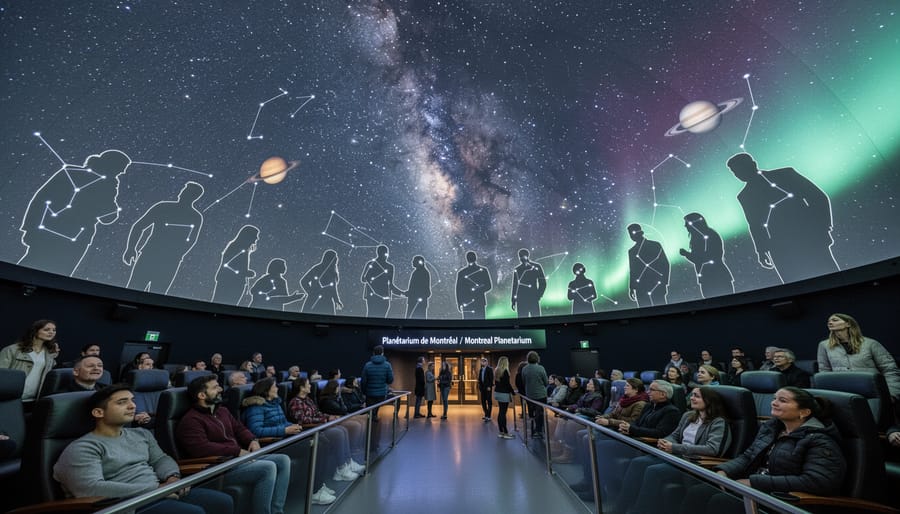
Espace pour la vie groups two complementary venues that showcase Montreal’s dedication to scientific discovery and environmental stewardship. The Planétarium Rio Tinto Alcan delivers immersive astronomy experiences through its state-of-the-art dome theaters, where visitors recline in seats that tilt toward curved screens projecting stars, planets, and cosmic phenomena in vivid detail. The permanent shows rotate seasonally, but the real draw through early November is the temporary exhibition Celestial Chronicles, running July 3 to November 1, 2026, which explores humanity’s evolving understanding of the night sky from ancient observatories to modern space missions.
Across the city on Île Sainte-Hélène sits the Biosphère, housed in the striking geodesic dome built for Expo 67. This environmental museum tackles urgent sustainability questions through interactive displays and multimedia installations. Two exhibitions currently define the experience:
- Seeking Refuge (June 9, 2026 to June 6, 2027) examines climate displacement and biodiversity protection through personal stories and data visualizations
- Meryl McMaster: As Strong as the Wind (November 18, 2025 to December 31, 2026) presents photographs exploring Indigenous identity and connection to land
Visitors to the Biosphère walk beneath the iconic steel lattice while engaging with hands-on exhibits about water systems, ecosystems, and climate change. The building itself, a recognizable silhouette against the St. Lawrence, symbolizes Montreal’s history of hosting world-stage events while embracing forward-thinking design.
Together, these institutions show how the city balances wonder and responsibility. The Planétarium looks outward to the cosmos, sparking awe through controlled light and sound. The Biosphère directs attention to Earth’s fragility, using the same immersive techniques to inspire action rather than just contemplation. Both venues make complex science accessible without dumbing it down, trusting visitors to absorb layered information at their own pace.
2. Château Ramezay, Historic Site and Museum of Montreal
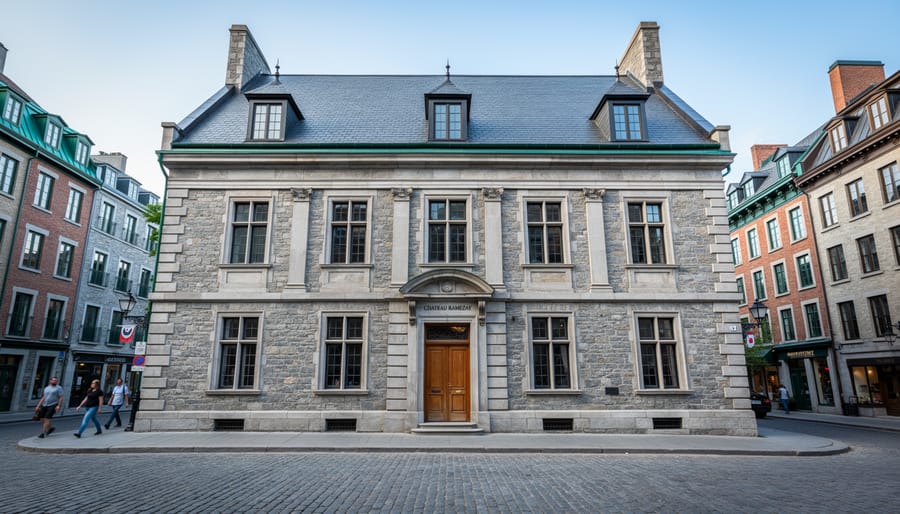
Step into one of Montreal’s oldest buildings and you’re walking through three centuries of the city’s story. The Château Ramezay, built in 1705 as the residence of Montreal’s French governor Claude de Ramezay, stands just across from Place Jacques-Cartier in the heart of Old Montreal. Its thick stone walls, distinctive French colonial architecture, and copper-topped turrets preserve the look of New France while housing collections that trace Montreal from Indigenous settlement through French and British rule to the modern metropolis.
The permanent galleries unfold chronologically. You’ll see Indigenous artifacts that predate European contact, French colonial furniture and trade goods, British military regalia from the occupation period, and domestic objects that show how Montrealers lived across the centuries. The museum’s strength lies in everyday items, ceramics, tools, clothing, toys, that make history tangible rather than abstract. A reconstructed period room shows 18th-century merchant life, while exhibits on the fur trade explain how Montreal became the commercial hub of New France.
Through December 18, 2026, the temporary exhibition ‘Real Life Instinct’ explores how Montrealers have adapted to change and upheaval throughout the city’s history, connecting past resilience to contemporary challenges.
Behind the museum, the Governor’s Garden recreates an 18th-century French formal garden with heritage vegetables, medicinal herbs, and geometric beds. It’s a quiet spot that shows what green space looked like when Montreal was still a walled colonial outpost, and it’s particularly lovely in summer and early fall.
3. Maison Saint-Gabriel, Historic Site and Museum
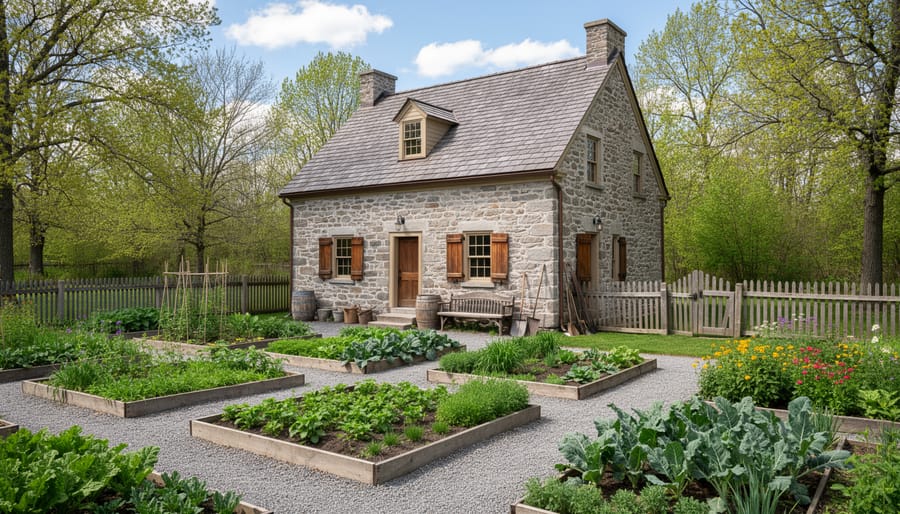
Tucked in the Pointe-Saint-Charles neighborhood, Maison Saint-Gabriel stands as one of Montreal’s oldest buildings and tells the remarkable story of the Filles du Roy, the young women who sailed from France in the 17th century to become settlers’ wives and help establish New France. Built in 1698 by Marguerite Bourgeoys and her religious community, this stone farmhouse served as a shelter where these women prepared for colonial life, learning practical skills before starting their new families.
The DIGITAL EXPERIENCE OF THE HOUSE exhibition, running through Oct 31, 2026, brings centuries-old stories to life through interactive projections and augmented reality. Visitors see period rooms transform as digital overlays recreate daily activities, baking bread in the massive hearth, spinning wool, or gathering around the communal table. Touchscreens reveal hidden details about objects in the collections, connecting artifacts to the women who used them.
Walk through meticulously restored 17th-century interiors where exposed stone walls, low-beamed ceilings, and simple wooden furniture recreate the austere conditions early settlers faced. Each room displays authentic period pieces, from cooking implements to religious artifacts. Outside, the heritage gardens grow vegetables, medicinal plants, and flowers that colonial families would have cultivated for survival and trade.
Hands-on workshops let visitors try historic crafts like candle-making or traditional weaving, while costumed interpreters demonstrate cooking techniques and household tasks. The farmstead atmosphere, complete with chickens wandering the courtyard, makes history tangible rather than abstract, particularly powerful for understanding the resilience required to build a life in 17th-century Quebec.
4. MEM, Centre des mémoires montréalaises
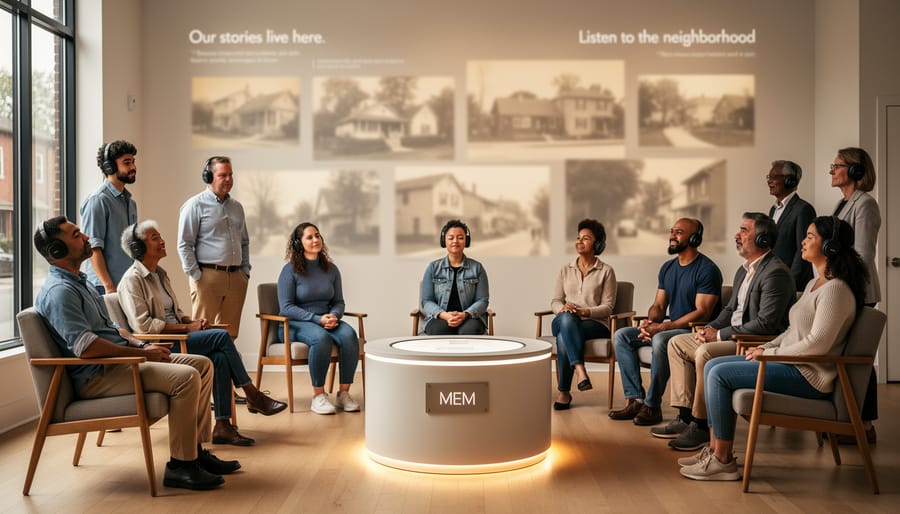
The Centre des mémoires montréalaises occupies a unique space in Montreal’s cultural landscape, it’s not a traditional museum but rather a dedicated center for preserving and sharing the lived experiences that shape the city’s neighborhoods. Opened in 2023 in the heart of Old Montreal, MEM collects oral histories, personal photographs, and community stories that might otherwise disappear, giving voice to everyday Montrealers whose experiences define the city’s character. The approach is deliberately grassroots: rather than curating artifacts behind glass, MEM creates interactive experiences that let visitors step into the memories of real residents.
The center’s ‘Le cucitrici: Voices of Montréal’s Italian seamstresses’ illustrates this community-first method. Through recorded interviews and personal objects, the exhibition captures the stories of Italian women who worked in Montreal’s garment industry, preserving a vital piece of the city’s immigrant and labor history. For younger visitors, ‘TEENS, Mystery game: Montréal in the Ice Storm’ turns a dramatic local event, the 1998 ice storm that paralyzed the city, into an interactive investigation where teens solve puzzles and piece together what happened during those dark, frozen weeks.
Running through December 31, 2026, ‘FICAM at the MEM!’ brings another layer to the center’s programming, connecting archival memory work with broader cultural conversations. The institution operates on the principle that cultural memory belongs to the community, not just institutions, and that preservation means keeping stories alive through participation rather than simply documenting them. Visitors leave understanding Montreal not as a collection of landmarks but as a living city shaped by the people who call it home.
5. Pointe-à-Callière, Montreal Museum of Archaeology and History
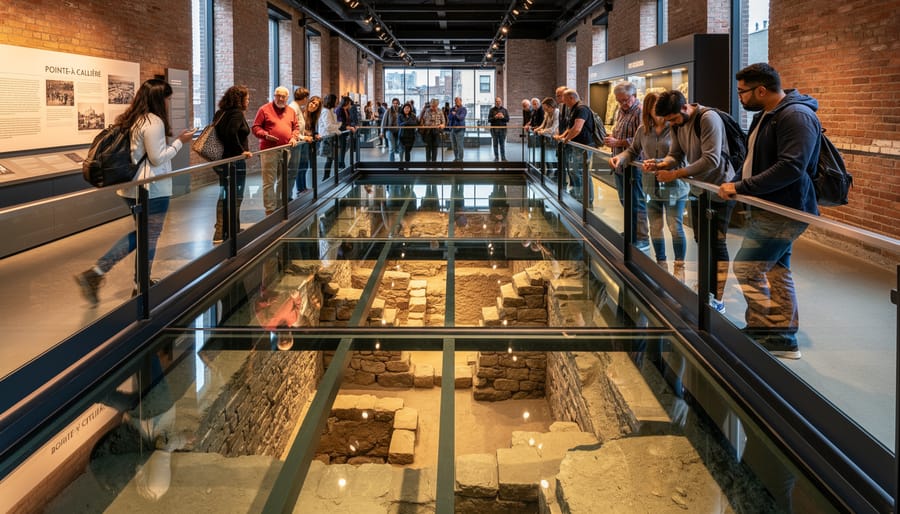
Pointe-à-Callière stands on the precise spot where Montreal was founded in 1642, making it the most historically significant archaeological site in the city. Built directly over actual ruins, the museum lets you descend into the underground crypt to walk through centuries of physical history, starting beneath the foundations of the original settlement and moving forward through time.
The experience is layered and immersive. You begin in the contemporary exhibition spaces, then descend into the archaeological crypt where preserved stone walls, drainage systems, and building foundations from different eras are visible exactly where they were discovered. Multimedia projections bring the ruins to life, showing how the site transformed from Indigenous gathering place to French trading post to British colonial center.
The museum’s greatest strength is how it combines tangible artifacts with technology to tell Montreal’s story. You’ll see everyday objects recovered from the site, ceramics, tools, personal items, displayed alongside the actual structural remains where they were found. Touch screens and video installations explain the context, while the crypt’s dramatic lighting reveals the archaeological layers stacked beneath modern Montreal.
Above ground, permanent exhibitions cover the city’s evolution through themes including trade, maritime history, and urban development. The museum occupies multiple interconnected buildings, and the architecture itself demonstrates how old and new can coexist, with glass pavilions rising above 18th-century stone structures. It’s Montreal’s largest history museum and the essential starting point for understanding how the city’s past shapes its present character.
6. McCord Stewart Museum
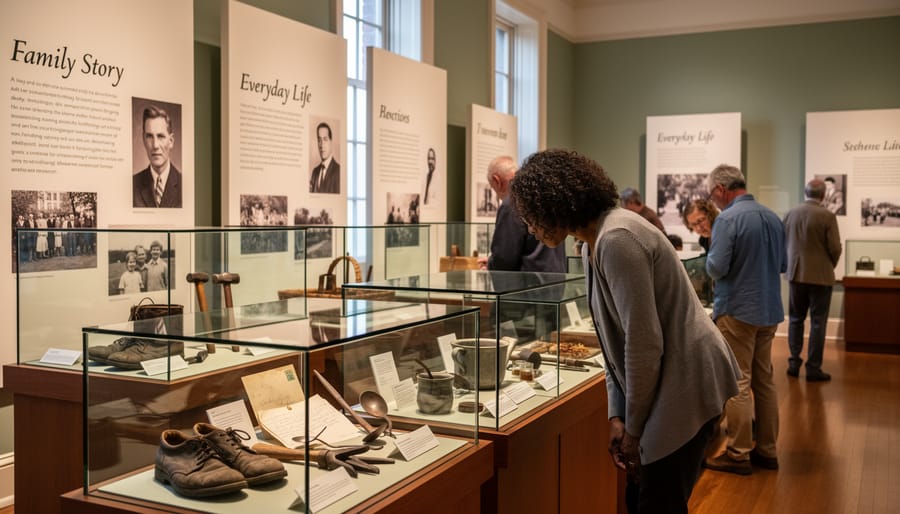
The McCord Stewart Museum houses one of North America’s most significant collections of social history artifacts, documenting how ordinary Montrealers lived, worked, and shaped their city across centuries. Walking through the galleries, you encounter everything from elaborate Victorian gowns to intimate family photographs, each object revealing something about Quebec identity and daily life. The museum’s strength lies in its ability to connect material culture with personal stories, showing how fashion choices, household objects, and community traditions reflect broader social change.
The permanent collections span several floors and thematic areas. The costume and textile holdings contain over 35,000 pieces, tracing Montreal’s evolution as a fashion center and how clothing expressed social status, cultural identity, and individual expression. The photography archive preserves millions of images, from 19th-century studio portraits to street photography capturing neighborhood transformations. Indigenous collections feature artifacts from First Nations and Inuit communities, documenting material culture and ongoing cultural practices rather than treating Indigenous heritage as purely historical.
Rotating exhibitions anchor contemporary relevance to these historical holdings. Recent shows have explored topics like immigration experiences, urban development, and cultural exchange, using artifacts to examine how Montreal’s identity continues to evolve. The museum also maintains decorative arts galleries showcasing furniture, ceramics, and household items that illustrate changing tastes and domestic life across different eras and social classes.
7. Montreal Museum of Fine Arts
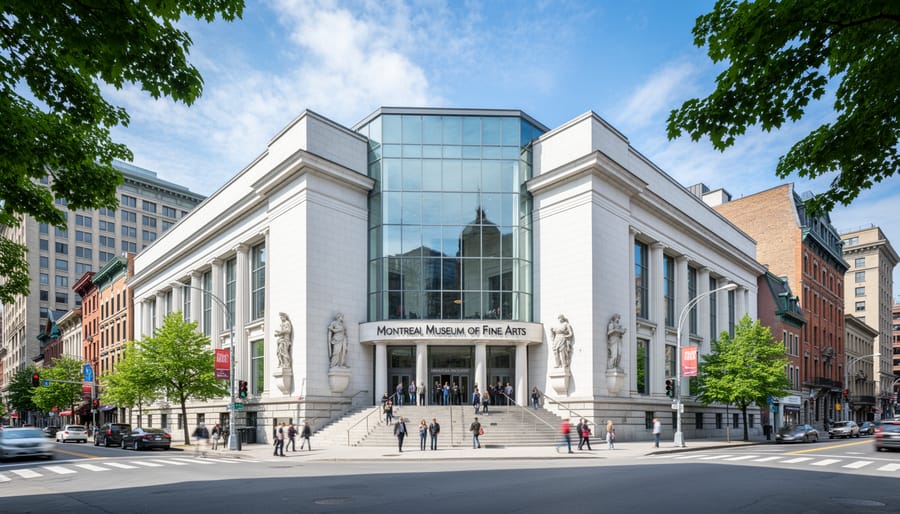
Canada’s oldest art museum sits along Sherbrooke Street, anchoring Montreal’s cultural corridor where world-class institutions cluster within walking distance. The Montreal Museum of Fine Arts spreads across five connected pavilions, each housing distinct collections that span 5,000 years of human creativity. Start in the main Michal and Renata Hornstein Pavilion to trace art history from ancient civilizations through European masters, then cross to the Jean-Noël Desmarais Pavilion for contemporary works and rotating international exhibitions.
The Quebec and Canadian Art galleries showcase the province’s artistic evolution, from religious art of New France through the Group of Seven to current francophone artists. The decorative arts wing holds remarkable furniture, textiles, and design objects that demonstrate how aesthetics shape daily life. The Claire and Marc Bourgie Pavilion combines concert hall and sacred art in a restored 1894 church, creating an unusual fusion of visual and performing arts under one roof.
What sets this institution apart is its encyclopedic scope within a distinctly Montreal context. You’ll move from Greek amphorae to Inuit sculpture, Renaissance paintings to video installations, African masks to Quebec folk art. The museum’s location makes it easy to combine with visits to the nearby Centre d’Architecture or to simply walk Sherbrooke Street’s museum row. Multiple entrances and the underground passage between buildings mean you can explore sections across multiple visits without retracing steps.
Practical Information for Visiting Montreal’s Cultural Institutions
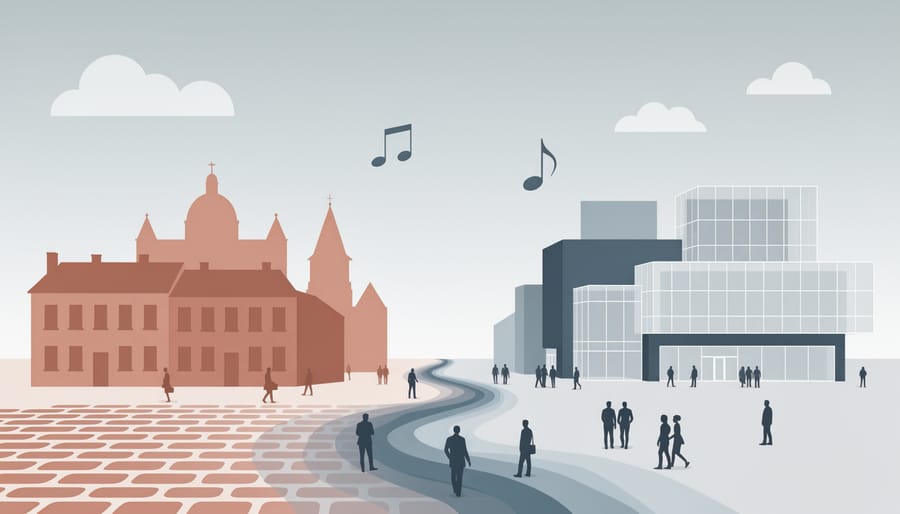
Planning your visits to Montreal’s cultural institutions requires attention to a few key logistics that will help you make the most of your time in the city.
Most institutions maintain their own websites with up-to-date information on opening hours, current admission prices, and any temporary closures. Check official sites directly before visiting, as schedules can shift seasonally and for special events. Many museums close on Mondays, though not all follow this pattern, so confirming hours prevents disappointment.
Admission patterns vary widely across institutions. Several offer free or reduced-price entry on specific evenings or the first Sunday of each month, while others maintain free admission year-round. These policies change, so verify current offerings when planning your itinerary. Some institutions require timed-entry tickets for popular temporary exhibitions, especially during peak summer months and holiday periods.
Seasonal timing matters for outdoor and historic sites. The Biosphère on Île Sainte-Hélène and the heritage gardens at Maison Saint-Gabriel deliver the best experience from May through October when landscapes are accessible and weather cooperative. Indoor museums welcome visitors year-round, though late fall and winter bring smaller crowds if you prefer a quieter experience.
| Institution | Neighborhood | Nearest Metro | Typical Visit Duration |
|---|---|---|---|
| Château Ramezay | Old Montreal | Champ-de-Mars | 1.5-2 hours |
| Pointe-à-Callière | Old Montreal | Place-d’Armes | 2-3 hours |
| McCord Stewart Museum | Downtown | McGill | 2-2.5 hours |
| Montreal Museum of Fine Arts | Golden Square Mile | Guy-Concordia | 2.5-4 hours |
| Biosphère | Île Sainte-Hélène | Jean-Drapeau | 1.5-2 hours |
Montreal’s metro system connects efficiently to most major institutions. The Orange and Green lines serve downtown museums, while the Yellow line reaches Île Sainte-Hélène. Bus routes extend to sites like Maison Saint-Gabriel in Pointe-Saint-Charles. Purchase an STM day pass if visiting multiple locations, as it covers unlimited metro and bus travel within the city.
Local Tips for Experiencing Montreal’s Cultural Scene
Look for multi-institution packages like the Montréal Museums Pass, which bundles admission to major cultural sites at a lower combined price than individual tickets. These passes typically cover 42 museums and last three consecutive days, letting you move freely between institutions without worrying about separate admission fees.
Plan your visit around Montréal Museums Day if you’re traveling in late spring, this annual event, usually held on the last Sunday of May, offers free or reduced admission to dozens of cultural institutions across the city. Check the official event website for the exact 2026 date and participating venues, as the lineup changes slightly each year.
Use cultural visits as anchors for neighborhood exploration rather than isolated stops. The McCord Stewart Museum puts you in the heart of the Golden Square Mile, where you can walk historic Sherbrooke Street and explore nearby Victorian architecture. Pointe-à-Callière in Old Montreal connects naturally to cobblestone streets, the Old Port, and Place Jacques-Cartier. Montreal public transit makes it easy to combine institutions across different neighborhoods in a single day.
- Visit smaller institutions like Maison Saint-Gabriel or MEM early in the day before crowds arrive at major museums.
- Check museum cafés and restaurants, which often occupy historic spaces and offer local cuisine alongside your cultural visit.
- Review temporary exhibition schedules on official websites before finalizing your itinerary, some shows run for limited periods and draw larger crowds.
- Use cultural institutions as starting points for neighborhood walks, letting the surrounding district extend your experience beyond the museum walls.
Many institutions host evening programming like nocturnes, late-night openings with special activities, live music, or lectures, these events draw locals and offer a different atmosphere than daytime visits. Google Street View helps you preview the physical layout and surrounding area of less-familiar institutions, so you know what to expect when you arrive.
Frequently Asked Questions About Cultural Activities in Montreal
Planning a cultural itinerary in Montreal raises practical questions about time, language, and logistics. Here are answers to help you organize your visits efficiently.
How many days do I need to explore Montreal’s major cultural institutions?
Three to four days allows you to visit the seven major institutions covered in this guide without rushing, with time to explore surrounding neighborhoods. Most visitors dedicate half a day to larger venues like Pointe-à-Callière or the Montreal Museum of Fine Arts, and two to three hours to smaller sites like Maison Saint-Gabriel.
Are exhibits available in both English and French?
Yes, all major cultural institutions in Montreal provide bilingual exhibits and interpretive materials. Signage, audio guides, and interactive displays typically appear in both languages, reflecting the city’s bilingual character.
Which institutions work best for families with children?
Espace pour la vie’s Planétarium offers immersive dome shows that captivate kids, while the MEM features interactive activities like the teen mystery game set during the Ice Storm. Maison Saint-Gabriel provides hands-on experiences with 17th-century daily life that engage younger visitors.
How can I save money on admission?
Check individual institution websites for free admission days, typically offered once monthly. The Montréal Museums Day in late May provides free access to participating venues, and museum passport programs bundle admission to multiple sites at reduced rates compared to individual tickets.
Do I need to book tickets in advance?
Most institutions accept walk-in visitors, but checking official websites for current booking requirements prevents disappointment during peak summer months or for special temporary exhibitions that may require timed entry.
Can I realistically visit multiple institutions in one day?
Two institutions per day works well if you choose venues in proximity, such as pairing Château Ramezay and Pointe-à-Callière in Old Montreal or combining a morning at McCord Stewart Museum with an afternoon at the Montreal Museum of Fine Arts along Sherbrooke Street.
Beyond museum visits, Montreal’s cultural calendar includes performances at Place des Arts and year-round Montreal festivals that complement institution visits. Evening cultural activities are accessible and safe when you follow basic precautions to stay safe at night in different neighborhoods.